I’ve been working as a photographer for almost 2 years now. And looking back at this time, I can see a number of stages I’ve grown through.
Each stage is characterised by what I believed is the most important element of great photography. And in this post I decided to analyse them and come to a conclusion on the benefits and dangers of each stage. Read more…
Have you ever opened up a photography magazine, saw a photo you liked and spotted the little blurb which reveals the camera settings?
The conclusion you might be tempted to make is that the aperture, focal length, shutter speed, ISO and flash settings you see there somehow “made” that photo.
And worse, you might try to remember those settings as “the right settings” to use the next time you want to take an environmental group portrait of a family “because I once saw a similar photo with those settings and I really liked it”.
Read more…
“Most of my pictures are grounded in people. I look for the unguarded moment, the essential soul peeking out, experience etched on a person’s face. I try to convey what it is like to be that person, a person caught in a broader landscape that I guess you’d call the human condition.”
It’s by Steve McCurry, whom I didn’t know much about until recently. I stumbled across him when a link called Behind The Scenes Of Photographing 2013 Pirelli Calendar showed up in one of my social media feeds. Read more…
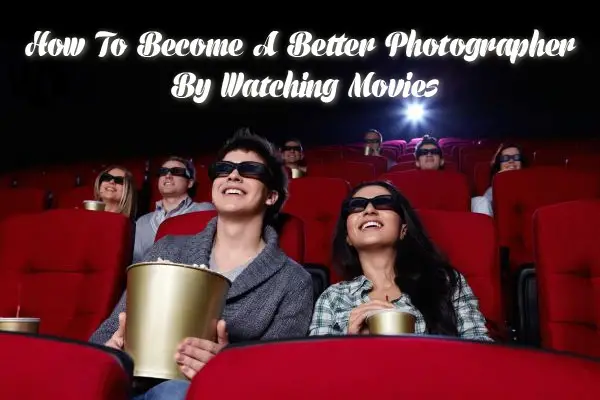
I went to the movies to see Skyfall recently. As I sat amongst strangers, throwing popcorn into my mouth, it suddenly dawned upon me that what a movie, at its simplest, is just a big collection of photographs.
Consider this: a movie’s sole purpose is to tell a story. So the movie-maker’s job is to position his cameras, subjects and lights to create compositions, angles and look/feel in a way which powerfully communicates his story – moment, by moment, by moment.
Frame, by frame, by frame. Photograph, by photograph, by photograph.

You want to improve your photography? Forget about photography courses – go watch a movie! But first…
Read more…
A degree in fine art with a major in photography has been one of the long-standing pathways of entering a photography career.
At the end of your degree, you’ll end up with a good-looking portfolio, as well as skills that enable you to translate ideas into photographic art.
Is it a good idea? Is studying 3-4 years going to get you a job? What other skills do you need? Read more…